

In gynaecological endoscopy, one of the most critical challenges in surgical education has always been the transition from theoretical knowledge to real surgical practice. Traditionally, this transition has occurred directly in the operating room, often exposing both patients and young surgeons to the uncertainties of the learning curve.
Today, this paradigm is changing.
The GESEA Educational Programme introduces a structured and validated pathway that fundamentally redefines how surgeons are trained—by ensuring that competence is achieved before performance.
The Problem with Traditional Surgical Training
For decades, surgical education followed an apprenticeship model: observe, assist, and eventually perform. While effective in its time, this model has clear limitations in modern healthcare systems, where patient safety, efficiency, and accountability are paramount.
Learning complex psychomotor skills directly in the operating room presents several risks:
Increased operative time
Higher stress levels for trainees
Potential compromise in patient safety
Lack of objective evaluation criteria
Most importantly, it creates variability. Not all surgeons are trained to the same standard, and progression often depends on opportunity rather than structured assessment.
This is where GESEA introduces a decisive shift.
Simulation as the Foundation of Competence
At the core of the GESEA programme lies a simple yet powerful principle:
surgical skills must be trained, tested, and validated in a safe environment before being applied in real patients.
Simulation-based training allows surgeons to:
Develop hand–eye coordination and spatial awareness
Improve precision and instrument handling
Repeat procedures without risk
Receive objective feedback
Progress at their own pace
This is not theoretical. Numerous scientific studies have demonstrated that simulation training significantly improves surgical performance in the operating room, reducing complications and accelerating the learning curve.
GESEA translates this evidence into a structured educational system.
The GESEA Training Tools: A Standardised Approach
The transition from simulation to surgery within GESEA is built on three validated training tools that objectively measure psychomotor skills:
LASTT – Laparoscopic Skills Training and Testing
Designed to assess camera navigation, depth perception, and bi-manual coordination, LASTT replicates the anatomical orientation of the female pelvis within a pelvic trainer.
It provides a measurable and reproducible way to evaluate fundamental laparoscopic skills, ensuring that surgeons develop control and spatial awareness before entering the operating room.
SUTT – Suturing and Knot Tying Training and Testing
Suturing is one of the most complex technical skills in endoscopic surgery. SUTT isolates this ability and evaluates precision, consistency, and fine motor control through structured exercises.
By mastering intra-corporeal suturing in a simulated environment, surgeons gain confidence and technical reliability that directly translate into surgical performance.
HYSTT – Hysteroscopic Skills Training and Testing
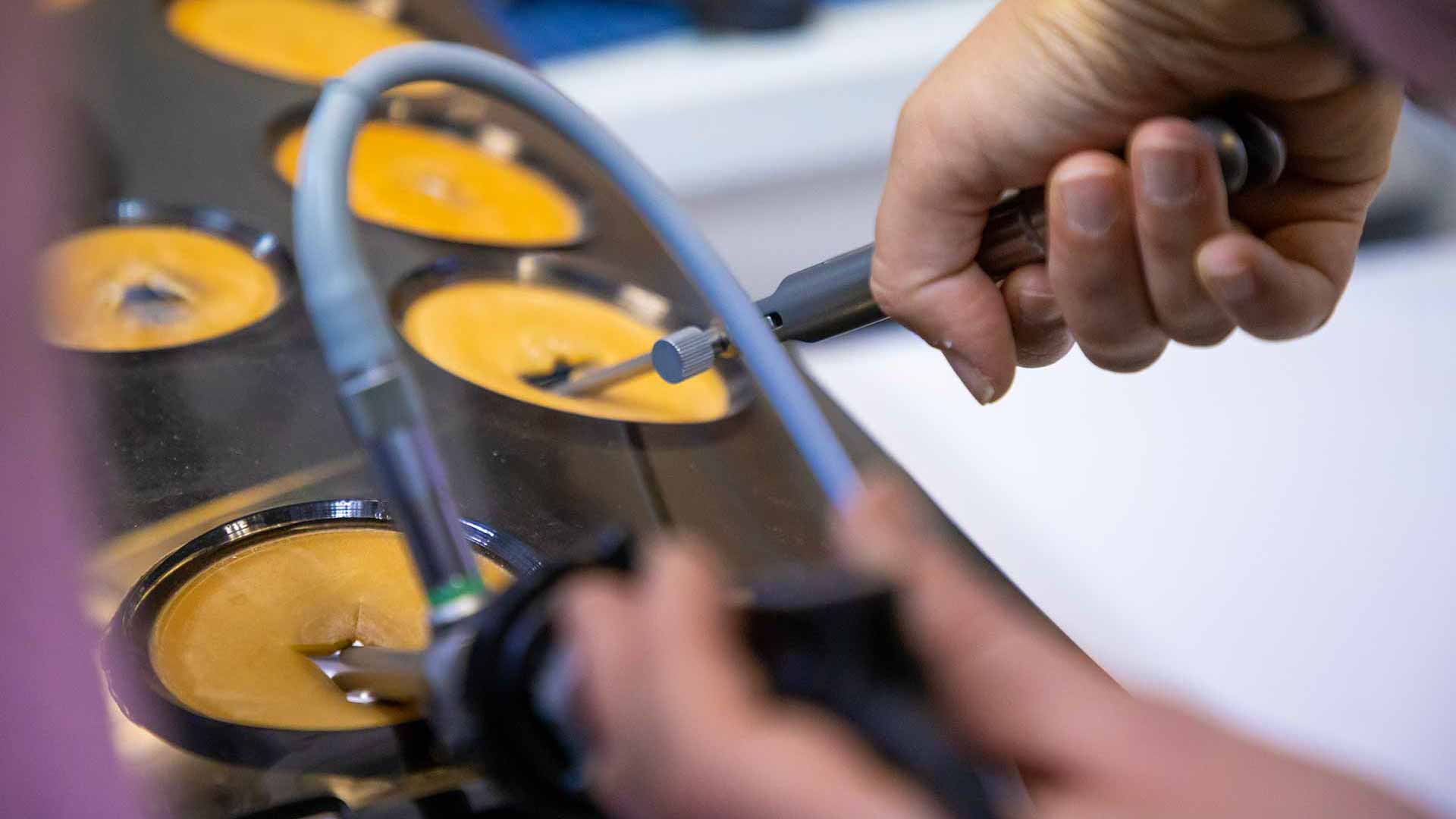
HYSTT focuses on navigation and orientation within the uterine cavity, requiring surgeons to operate in a “key-hole” environment with limited visual feedback.
It trains the delicate coordination required in hysteroscopy, ensuring safe and controlled instrument handling.
Together, these tools form a standardised and objective framework for skill acquisition, removing subjectivity from surgical training.
Competence Before Performance
What distinguishes GESEA from traditional training models is its insistence on validated competence before clinical application.
Surgeons do not progress based on time or exposure alone. They progress only after demonstrating measurable proficiency in:
Knowledge (through e-learning and theoretical exams)
Psychomotor skills (through validated simulation exercises)
Surgical capability (through structured evaluation pathways)
This approach ensures that when a surgeon enters the operating room, they are not “learning from scratch,” but applying already developed and tested skills.
Impact on Patient Safety and Surgical Outcomes
The benefits of this model extend far beyond education.
By shifting the learning curve away from the patient and into the simulation lab, GESEA contributes to:
Reduced complication rates
Greater procedural efficiency
Increased surgeon confidence
Improved standardisation of care
Ultimately, it aligns surgical education with the fundamental principle of medicine: first, do no harm.
A New Standard in Surgical Education
The transition from simulation to surgery is no longer a leap of faith. It is a structured, measurable, and validated process.
Through its integrated system of training tools, certification pathways, and objective assessment, GESEA has established a new standard for endoscopic surgical education—one that is recognised across Europe and increasingly adopted worldwide.
At the GESEA Training Center in Naples, this philosophy is applied every day. Surgeons are guided through a progressive journey, from foundational psychomotor training to advanced clinical competence, within an environment that prioritises excellence, safety, and international standards.
Because in modern surgery, it is no longer enough to learn by doing.
You must first learn to do it right.
📍 GESEA Training Center – AOU Federico II of Naples
Building 9 – Ground Floor
Via Pansini, 5 – 80131 Naples, Italy
📞 +39 081 878 05 64
📧 info@newcongress.it
📧 contact@geseanapoli.com